
Emotional Healing & Self-Reflection
Why Journaling Is One of the Most Powerful Ways to Heal Emotional Wounds
Discover how putting your thoughts into words can help you understand difficult emotions, reconnect with yourself, and move forward with greater clarity, compassion, and hope.
Emotional wounds do not always leave visible signs. Sometimes they appear as overthinking, exhaustion, guardedness, self-doubt, anger, disconnection, or the feeling that a part of you is still living in something that has already ended.
You may know that something hurt you without fully understanding why it continues to affect you. You may also have feelings that seem too complicated to explain aloud. Journaling can create a private place where those thoughts no longer have to remain hidden, rushed, or perfectly organized.
Writing does not erase what happened. It does not require you to forgive before you are ready or force every experience into a positive lesson. Instead, journaling for emotional healing can help you slow down, name what you feel, recognize what you need, and begin relating to your story with greater honesty and self-compassion.
Sometimes healing begins when the thoughts you have been carrying silently are finally given somewhere safe to exist.
What Does It Mean to Heal an Emotional Wound?
An emotional wound may develop after heartbreak, rejection, grief, betrayal, disappointment, family conflict, a major transition, or a prolonged season of stress. It can also come from repeatedly feeling unseen, unsupported, unsafe, or responsible for everyone except yourself.
Emotional healing does not necessarily mean forgetting the experience or never feeling sadness again. It may mean that the memory no longer controls every decision. It may mean understanding your triggers, setting healthier boundaries, rebuilding trust in yourself, or creating a life that is no longer organized around the pain.
Healing is often less about becoming the person you were before and more about learning how to care for the person you are now.

Why Journaling Can Support Emotional Healing
Difficult emotions often feel more overwhelming when they remain undefined. You may know you feel “bad” without knowing whether the deeper feeling is grief, rejection, loneliness, resentment, fear, guilt, disappointment, or exhaustion.
Writing encourages you to slow down long enough to examine what is happening beneath the surface. This can create distance between you and the emotion, making it easier to observe your experience rather than feeling completely consumed by it.
Journaling Helps Give Emotions a Name
Emotional pain can feel like one large, confusing weight. Journaling helps separate that weight into more specific feelings. Once you can name an emotion, you may be better able to understand what caused it and what kind of support you need.
Writing Creates Space Between You and the Pain
When thoughts remain in your mind, they can repeat without resolution. Putting them onto a page creates a visible record you can pause, examine, and return to later. The experience becomes something you are observing—not the entirety of who you are.
Journaling Can Reveal Emotional Patterns
Over time, your entries may show recurring triggers, fears, relationship dynamics, or beliefs about yourself. Recognizing a pattern does not immediately change it, but awareness gives you a more informed place from which to make a different choice.
It Gives Unspoken Thoughts Somewhere Safe to Go
There may be things you are not ready to discuss or words you cannot say directly to another person. An unsent letter or honest journal entry allows you to express what remains unfinished without requiring an immediate conversation or response.
Writing Encourages Self-Compassion
Journaling can reveal how harshly you speak to yourself. Once those words are visible, you can begin questioning whether they are fair, accurate, or helpful. You can then practice responding to yourself with the patience you would offer someone you love.
It Can Help Separate Responsibility From Blame
Emotional wounds often leave people carrying responsibility for circumstances, choices, or behavior that did not fully belong to them. Writing can help you distinguish what was within your control from what belonged to another person or situation.
Journaling Helps You Notice Your Progress
Healing can feel invisible while it is happening. Previous journal entries may show that you are responding differently, setting stronger boundaries, recovering more quickly, or speaking to yourself with greater kindness than you did before.
Writing Can Turn Reflection Into Action
Journaling becomes especially valuable when insight leads to a gentle next step. Once you understand what you need, you can identify a boundary to set, a conversation to have, a habit to change, or a source of support to seek.
What Is Expressive Writing?
Expressive writing is a form of personal writing that explores your deepest thoughts and feelings about stressful, painful, or meaningful experiences. Unlike a daily record of what happened, expressive writing focuses on how an experience affected you and what it means in your life.
You might write about what you lost, what you wish had happened differently, what you were afraid to admit, or how the experience changed the way you see yourself.
The goal is not to create beautiful writing. The value is in allowing yourself to be emotionally honest without worrying about grammar, structure, or whether anyone else would understand.
A Simple Expressive Writing Exercise
Set aside approximately ten minutes. You may stop sooner when the writing begins to feel emotionally overwhelming.
-
1 Choose one experience.
Select something specific rather than trying to process your entire life at once. -
2 Describe how it affected you.
Focus on the emotions, thoughts, beliefs, and changes the experience created. -
3 Write without editing.
Allow the thoughts to appear before deciding whether they are reasonable, polished, or complete. -
4 Ask what you need now.
End by identifying one compassionate need or realistic next step.
 Your journaling practice does not need to be perfect or lengthy to become meaningful.
Gentle Journal Prompts for Emotional Healing
A blank page can feel intimidating, particularly when your emotions already feel difficult to organize. Guided journal prompts offer a clear starting point without deciding what your answer should be.
What emotion have I been trying to avoid, and what might it be asking me to notice?
What part of this experience has been the hardest for me to explain?
What am I carrying that was never entirely mine to hold?
What do I need today that I have been expecting myself to live without?
What boundary could help me feel safer, calmer, or more respected?
What would I say to myself if I responded with compassion instead of criticism?
What has this difficult season taught me about my needs and values?
What might become possible when this pain no longer controls my choices?
Is Handwriting Better Than Digital Journaling?
The most useful method is generally the one you can use consistently and honestly. Handwriting may feel slower, more private, and more emotionally grounding. Typing may feel easier when your thoughts move quickly or when accessibility and convenience matter most.
You can also combine the two. Use a physical guided journal for deeper reflection and a private note on your phone for thoughts that appear while you are away from home.
The format matters less than creating a space where you feel able to tell yourself the truth.
How to Build a Healing Journal Routine
A journaling routine should feel supportive rather than demanding. You do not need to write every day or complete several pages at a time.
Choose a Gentle Schedule
Begin with two or three short sessions each week instead of creating a routine that feels difficult to maintain.
Create a Calming Cue
Pair journaling with tea, quiet music, a comfortable chair, or a few slow breaths to signal that this is a safe moment.
Use One Prompt at a Time
Give yourself permission to explore a single question instead of trying to solve every emotional concern in one sitting.
End With Care
Close each entry by naming what you need, what you handled well, or one grounding activity you can do next.
What If Journaling Makes You Feel Worse?
Writing about painful experiences can sometimes increase discomfort in the moment. This does not necessarily mean you are journaling incorrectly. However, you should not force yourself to continue when the process feels emotionally unsafe or destabilizing.
Pause when you notice intense distress, panic, dissociation, or the feeling that you are becoming trapped in the memory rather than reflecting on it. Shift to something grounding, such as noticing your surroundings, drinking water, walking, or contacting someone you trust.
Instead of writing about what happened, describe five things you can see, four things you can feel, three things you can hear, two things you can smell, and one thing you appreciate in the present moment.
Journaling is a self-reflection tool, not a substitute for professional care. A qualified mental health professional can offer additional support when emotional pain feels persistent, intense, or difficult to manage alone.

A Gentle Place to Begin
You Do Not Have to Face the Blank Page Alone
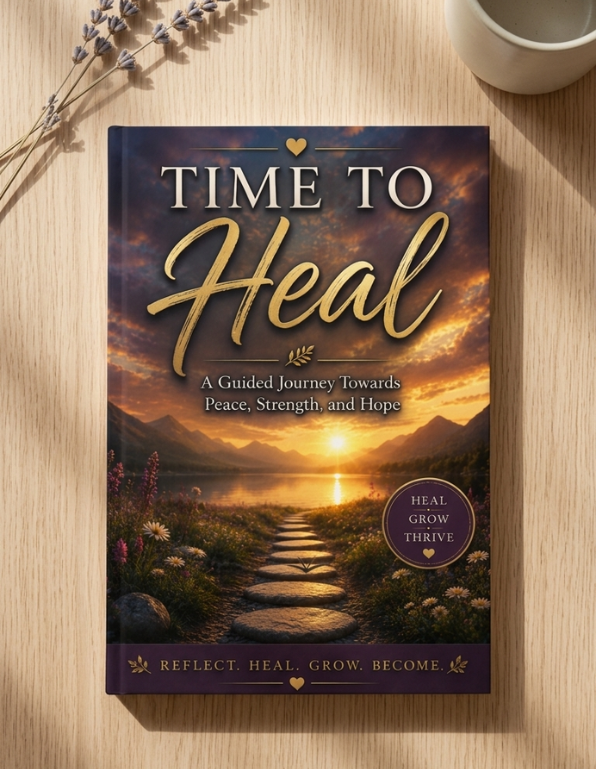
Time To Heal is a guided journal created to help you acknowledge difficult emotions, release what has been weighing on you, rebuild your relationship with yourself, and move toward your next chapter with greater peace, strength, and hope.
Explore the Time To Heal JournalFrequently Asked Questions About Healing Through Journaling
Can journaling help with emotional healing?
Journaling may support emotional healing by helping you identify feelings, organize thoughts, recognize patterns, and explore difficult experiences privately. It is a supportive tool rather than a guaranteed cure or replacement for professional care.
How often should I journal for emotional wellness?
There is no required schedule. Some people benefit from a few minutes each day, while others prefer two or three thoughtful sessions each week. Consistency is useful, but the routine should remain emotionally sustainable.
What should I write when I do not know how I feel?
Begin with what you notice physically or mentally. You might complete the sentences “Right now, I notice…,” “Something feels difficult because…,” or “What I need most today is…”
Is a guided journal better than a blank notebook?
A guided journal can be especially helpful when a blank page feels overwhelming. Prompts provide structure and direction, while a blank notebook offers more freedom. The better option is the one that helps you write honestly and consistently.
Can journaling replace therapy?
No. Journaling can complement emotional wellness practices, but it does not replace individualized assessment, treatment, or support from a qualified mental health professional.
Healing Can Begin With One Honest Sentence
You do not need to understand everything today. You do not need the perfect words or a complete plan for moving forward. Sometimes the first step is simply opening the page and allowing yourself to admit, “This is what I have been carrying.”
This article is intended for general educational and self-reflection purposes. It is not medical advice, diagnosis, or a replacement for professional mental health care. Consider contacting a qualified professional when emotional distress feels intense, persistent, or difficult to manage.