
Emotional Healing & Self-Discovery
The Healing Journey Isn’t About Becoming Someone New—It’s About Finding Yourself Again
Healing is not about replacing who you are. It is about gently reconnecting with the parts of yourself that became hidden beneath heartbreak, survival, responsibility, fear, and everything you had to carry.
After a difficult season, you may look at your life and wonder where you went. The person you remember—confident, hopeful, creative, trusting, playful, or full of dreams—may feel distant from the person you have become.
Perhaps you spent so long surviving that you stopped asking what made you feel alive. Maybe you adjusted yourself to fit a relationship, cared for everyone except yourself, or built your days around avoiding another disappointment.
When this happens, healing can feel like pressure to reinvent yourself. You may believe you need a completely new personality, new life, new appearance, or new identity before you can finally feel whole.
But your healing journey may not be asking you to become someone new. It may be inviting you to return to yourself—the self beneath the fear, performance, emotional exhaustion, and expectations you were never meant to carry forever.
Healing is not always a transformation into someone else. Sometimes it is the slow, courageous return to the person you had to leave behind while you were surviving.
Why You May Stop Feeling Like Yourself
Feeling disconnected from yourself does not always happen suddenly. It often develops through small compromises, accumulated stress, or long periods of placing your emotional needs last.
You may slowly stop participating in activities you enjoy. You may become less expressive because your feelings were repeatedly dismissed. You may shape your personality around keeping someone else comfortable, avoiding conflict, meeting expectations, or appearing strong.
Eventually, you may realize that you can describe what everyone else needs from you—but struggle to explain what you want, value, enjoy, or need for yourself.
This does not mean your identity has disappeared. It may mean the truest parts of you have not received enough attention, safety, space, or permission to be expressed.
 Reconnecting with yourself begins by creating space to hear your own thoughts again.
Healing Is Not Reinvention—It Is Reconnection
Reinvention Says
I must become more impressive, productive, attractive, agreeable, or successful before I can feel worthy again.
Reconnection Says
My worth was never erased. I need time, honesty, safety, and compassion to experience it again.
Reinvention Focuses On
Proving that the painful experience did not defeat you by changing everything as quickly as possible.
Reconnection Focuses On
Remembering your values, rebuilding self-trust, and creating a life that feels emotionally honest.
Signs You May Have Become Disconnected From Yourself
Self-disconnection can look different for everyone. These experiences may suggest that your healing journey needs to include rediscovering your identity, preferences, needs, and voice.
You Struggle to Answer Simple Questions About Yourself
Questions such as “What do you enjoy?” or “What do you want?” may feel surprisingly difficult. You may be more familiar with what other people prefer than with your own desires.
When was the last time I made a choice based only on what felt meaningful or enjoyable to me?
Your Identity Is Built Around What You Do for Others
You may define yourself almost entirely as a parent, partner, employee, caregiver, helper, or problem-solver. These roles may be meaningful, but they are not the full description of who you are.
Who am I when no one needs anything from me?
You No Longer Make Time for What Once Brought You Joy
Interests, friendships, creativity, movement, rest, and personal dreams may have slowly disappeared from your routine.
What did I once enjoy before life became centered on surviving or meeting expectations?
You Constantly Adjust Yourself to Be Accepted
You may change your opinions, needs, personality, or boundaries depending on who is around you. Being accepted may feel safer than being fully known.
Where in my life do I feel safest being honest and fully myself?
You Feel Emotionally Numb or Uninspired
Life may appear functional from the outside, yet feel empty, repetitive, or disconnected inside. You may not feel deeply sad, but you also do not feel fully present.
What part of my life feels as though I am simply going through the motions?
How to Find Yourself Again During Your Healing Journey
Finding yourself again is rarely one dramatic realization. It happens through repeated moments of honesty, curiosity, self-respect, and intentional choice.
Give Yourself Permission to Be More Than What Happened
A painful experience can become so central that it begins to define how you describe yourself. You become the person who was rejected, betrayed, abandoned, disappointed, or forced to start over.
Your story includes what happened, but your identity is larger than the wound. Begin noticing the qualities, values, interests, and dreams that exist beyond the experience.
Who am I beyond what I have survived?
Remember What Used to Make You Feel Alive
Think about the moments when you felt curious, expressive, peaceful, energized, creative, or free. These memories may contain clues about parts of yourself that need space again.
You do not have to recreate your former life exactly. Begin by reintroducing one activity, relationship, place, or interest that reminds you of yourself.
What did I love before I started believing I had no time, permission, or energy for it?
Reconnect With Your Core Values
Values are the principles that help you recognize what feels meaningful, honest, and aligned. They may include family, creativity, faith, peace, integrity, freedom, compassion, stability, courage, or growth.
When your life repeatedly conflicts with your values, you may feel lost even when everything looks successful from the outside.
Which three values do I want my next chapter to reflect most clearly?
Listen to Your Preferences Without Judging Them
Finding yourself again can begin with small decisions. What music do you enjoy? How do you prefer to rest? What colors, spaces, routines, conversations, and experiences make you feel comfortable?
Your preferences do not need to be impressive or approved by anyone else. Small choices teach you that your voice deserves to influence your own life.
What would I choose differently if I stopped worrying about how the choice looked to other people?
Stop Treating Rest as Something You Must Earn
Emotional exhaustion can make it difficult to hear yourself. When every moment is filled with work, responsibility, noise, or recovery from stress, your internal needs are easily overlooked.
Rest creates space for your thoughts, preferences, creativity, and emotions to become visible again.
What kind of rest does my mind, body, or heart need most right now?
Practice Making Decisions You Can Trust
Difficult experiences can make you question your judgment. You may look to everyone else for confirmation before making even small choices.
Rebuilding self-trust begins with manageable decisions. Choose something, observe how it feels, learn from the outcome, and remind yourself that an imperfect decision does not make you incapable.
What small decision can I make this week without asking someone else to approve it?
Create Boundaries That Allow the Real You to Exist
It is difficult to reconnect with yourself in environments that require constant performance, silence, self-abandonment, or emotional overextension.
Boundaries create room for your energy, needs, opinions, and values to matter. They help protect the person you are working to rediscover.
What boundary would make it easier for me to remain connected to myself?
Let Yourself Change Without Believing You Are Lost
Finding yourself again does not mean returning to every belief, habit, dream, or relationship you once had. Some parts of you have changed because you have learned, matured, and experienced more life.
Your goal is not to become an exact copy of your former self. It is to reconnect with what remains authentic while giving yourself permission to grow.
What part of my old identity no longer fits—and what feels more honest now?
 You do not have to see your entire future before taking one honest step toward yourself.
What Parts of Yourself Are Worth Reclaiming?
Reclaiming yourself does not require returning to every part of your past. Focus on the qualities and experiences that made you feel authentic, connected, and emotionally alive.
Your Voice
Your ability to express what you think, feel, need, believe, and prefer without immediately apologizing.
Your Joy
The interests, relationships, humor, creativity, and ordinary experiences that make life feel emotionally meaningful.
Your Dreams
The goals or possibilities you postponed while surviving, caregiving, pleasing others, or recovering from disappointment.
Your Standards
The boundaries, values, expectations, and forms of treatment that protect your peace and self-respect.
Your Softness
The part of you that can feel, trust, hope, rest, receive love, and remain open without abandoning discernment.
Your Confidence
The belief that you can make decisions, survive mistakes, learn, adapt, and build a life that feels like your own.
Journal Prompts for Finding Yourself Again
These self-discovery journal prompts can help you explore who you were, who you are now, and what you want to carry into your next chapter. Choose one question at a time and write without forcing a perfect answer.
When did I last feel completely like myself, and what was present in my life at that time?
What parts of myself became smaller while I was trying to survive, belong, or keep someone else happy?
What do I genuinely enjoy when no one else is watching or evaluating me?
Which roles have become my entire identity, and who am I outside those responsibilities?
What values do I want my choices, relationships, and routines to represent?
What dream have I repeatedly postponed because I stopped believing there was room for me?
What have I accepted that no longer matches the person I am becoming?
What does feeling emotionally safe enough to be myself look like?
What would I choose if I trusted that my needs and preferences mattered?
What is one part of myself I am ready to welcome back?
The “Come Back to Yourself” Exercise
Use this simple reflection practice when you feel emotionally lost, disconnected, or uncertain about what you need.
-
1 Write what feels missing.
Complete the sentence, “Lately, I have not felt like myself because…” -
2 Name what you miss about yourself.
Identify a quality, routine, interest, relationship, or dream that once made you feel connected. -
3 Choose one part to reclaim.
Do not try to repair your entire identity at once. Select one meaningful area. -
4 Create one small action.
Schedule thirty minutes for an old interest, contact a trusted friend, state one honest preference, or rest without guilt. -
5 Notice how it feels.
Ask whether the action created energy, relief, curiosity, peace, or a stronger sense of recognition.
What If You Do Not Want to Become Your Old Self Again?
Finding yourself again does not require you to return to every version of who you used to be. Your former self may have lacked boundaries, ignored important needs, accepted unhealthy situations, or lived according to goals that no longer matter.
Healing allows you to reclaim what was authentic without repeating what was harmful. You can bring forward your creativity while leaving behind people-pleasing. You can reclaim softness without abandoning discernment. You can become hopeful again without ignoring what experience taught you.
Do not ask, “How do I become exactly who I was?” Ask, “What parts of me still feel true, and what parts am I ready to grow beyond?”
Signs You Are Beginning to Feel Like Yourself Again
Reconnection may happen quietly. You may not wake up one morning feeling completely restored, but you may begin noticing small changes.
You may laugh more freely, state an opinion without apologizing, enjoy time alone, restart an old interest, feel curious about the future, or make a decision without needing constant reassurance.
You may also notice that your life feels less like a performance. Your choices begin reflecting your values rather than your fear of disappointing someone.
These moments matter. They are evidence that you are not becoming a stranger to yourself. You are rebuilding a relationship with the person who has been there all along.

A Guided Journey Back to Yourself
You Do Not Have to Find Yourself on an Empty Page
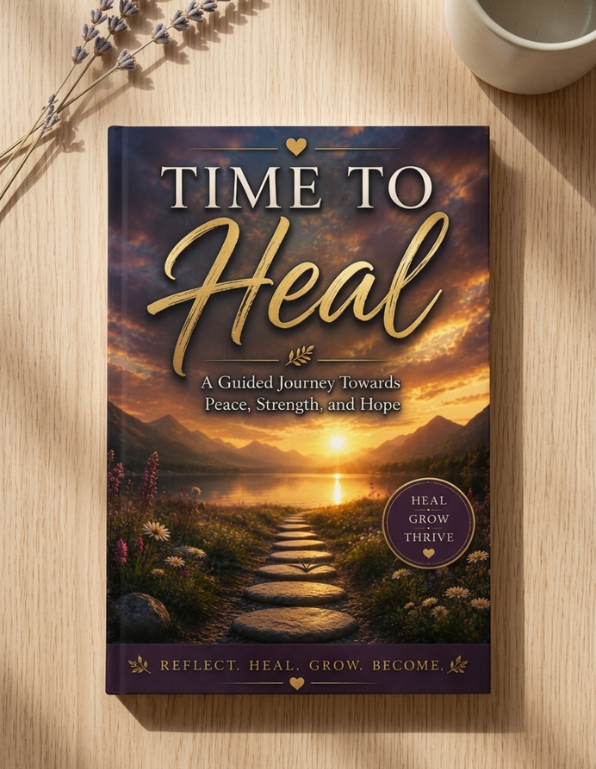
Time To Heal is a guided journal created to help you acknowledge what hurt, release emotional weight, rebuild your relationship with yourself, and move toward your next chapter with greater peace, strength, and hope.
Explore the Time To Heal JournalFrequently Asked Questions About Finding Yourself Again
How do I find myself again after a difficult season?
Begin by reconnecting with your values, preferences, interests, needs, and personal boundaries. Choose small actions that help you feel more emotionally honest rather than trying to transform your entire life immediately.
Why do I no longer feel like myself?
Long periods of stress, caregiving, heartbreak, people-pleasing, major transitions, or emotional exhaustion can leave little room for your own needs and identity. Feeling disconnected does not mean the real you has permanently disappeared.
Can healing change who I am?
Healing may change your boundaries, priorities, relationships, and understanding of yourself. The goal is not to remain exactly the same, but to grow in a way that remains connected to your authentic values and needs.
How can journaling help me reconnect with myself?
Journaling can create space to explore your feelings, preferences, values, patterns, and goals without interruption. Guided prompts may be especially helpful when you feel uncertain about where to begin.
How long does it take to feel like yourself again?
There is no universal timeline. Reconnection often happens gradually through repeated choices that build self-awareness, emotional safety, confidence, and self-trust.
What if I need more support than journaling provides?
Journaling is one supportive tool, but it does not replace individualized professional care. Consider speaking with a qualified mental health professional when emotional distress or identity concerns feel persistent, intense, or difficult to manage alone.
You Were Never Completely Lost
The parts of you that became quiet are still worthy of being heard. The dreams you postponed can still be revisited. The voice you silenced can become stronger. Healing is not about creating a more acceptable version of yourself. It is about building a life where the real you finally has room to exist again.
This article is intended for general education and self-reflection. It is not medical advice, diagnosis, or a replacement for professional mental health care. Consider contacting a qualified professional when emotional distress or disconnection from yourself feels intense, persistent, or difficult to manage.