
How to Prepare Your Child Emotionally for Their First Day of School
A gentle, parent-friendly guide to helping children feel calm, confident, and ready for their first day of school through routines, conversation, creativity, and encouragement.

The first day of school is a big emotional milestone for children and parents. Whether your child is starting preschool, kindergarten, elementary school, or returning after a long summer break, the first day can bring excitement, nervousness, curiosity, and even fear.
Preparing your child emotionally for their first day of school is just as important as buying supplies, packing a backpack, or picking out an outfit. Children need to feel safe, encouraged, and confident before they walk into a new classroom. With the right support at home, the first day can feel less overwhelming and more like the beginning of a positive new chapter.
Start Talking About School Before the First Day
Children feel more secure when they know what to expect. Instead of waiting until the night before school starts, begin talking about the first day several days or weeks in advance. Keep the conversation warm, simple, and positive.
You can talk about what the classroom may look like, what the teacher may do, how lunch or snack time works, and what your child might do when they arrive. The goal is not to explain every detail perfectly. The goal is to make school feel familiar instead of unknown.
Validate Their Feelings Instead of Rushing Past Them
If your child says they are nervous, shy, scared, or unsure, try not to immediately say, “You’ll be fine.” Even though the intention is loving, children often need to feel understood before they can feel reassured.
A better approach is to name and validate the feeling first. You might say, “It makes sense to feel nervous about something new,” or “A lot of kids feel that way before the first day.” This helps your child understand that their feelings are normal, not bad.
Create a Simple Morning Routine
A rushed morning can make the first day feel more stressful. A simple routine helps children feel grounded and prepared. Practice waking up, getting dressed, eating breakfast, brushing teeth, packing the backpack, and leaving the house calmly.
Young children especially benefit from repetition. When they have already practiced the routine, the first day does not feel like a brand-new challenge. It feels like something they have done before.
Use Positive Words They Can Carry With Them
Children need simple words they can remember when they feel unsure. Positive affirmations and encouraging phrases can help shape their inner voice before school begins.
Try short phrases like “I am brave,” “I can try new things,” “I am kind,” “I can ask for help,” and “I am ready to learn.” These words are easy for children to repeat and can become emotional anchors throughout the school day.
Visit the School or Talk Through the Drop-Off Plan
If possible, visit the school before the first day. Show your child the entrance, playground, classroom area, or where drop-off may happen. If visiting is not possible, talk through the plan clearly.
Children often feel anxious when they do not know what will happen next. Explain who will take them to school, where you will say goodbye, who will pick them up, and when they will see you again.
Practice Small Social Moments at Home
Some children worry about making friends, speaking to the teacher, or knowing what to say. Practicing simple social moments at home can help your child feel more prepared.
Role-play short situations like saying hello, asking to play, raising a hand, telling the teacher they need help, or asking where to put their backpack. Keep it playful and low-pressure.
Give Them a Creative Way to Express Big Feelings
Not every child can explain their feelings clearly. Some children show nervousness through clinginess, quietness, tantrums, stomachaches, or repeated questions. Creative activities can help children express what they may not know how to say.
Coloring, drawing, and simple first-day activities give children a gentle way to process excitement and worry. A coloring book made for the first day of school can become a conversation starter between parent and child.
Prepare a Comfort Item or Goodbye Ritual
A small comfort item or goodbye ritual can help children feel connected to home during the school day. This might be a bracelet, a heart drawn on the hand, a special phrase, a small note, or a hug routine.
The best goodbye rituals are short and consistent. Long emotional goodbyes can sometimes increase anxiety. A warm, confident goodbye helps children feel safer moving into the classroom.
Focus on Effort, Not Perfection
Children do not need the first day to go perfectly. They need to know they can try, make mistakes, ask for help, and still be loved. Preparing emotionally means helping them understand that learning takes time.
Instead of saying, “Be perfect,” encourage effort. Say, “Try your best,” “Be kind,” “Ask for help if you need it,” and “It is okay if everything feels new.”
Talk About What Happens After School
Many children feel better when they know what comes after the school day ends. Talk about pickup, dinner, a favorite snack, quiet time, or a special first-day tradition.
Having something familiar to look forward to can help children feel more secure. It reminds them that the first day is only one part of the day, not the whole story.
The first day of school feels easier when a child knows they are prepared, loved, and never alone.

A Gentle Way to Prepare for the Big Day
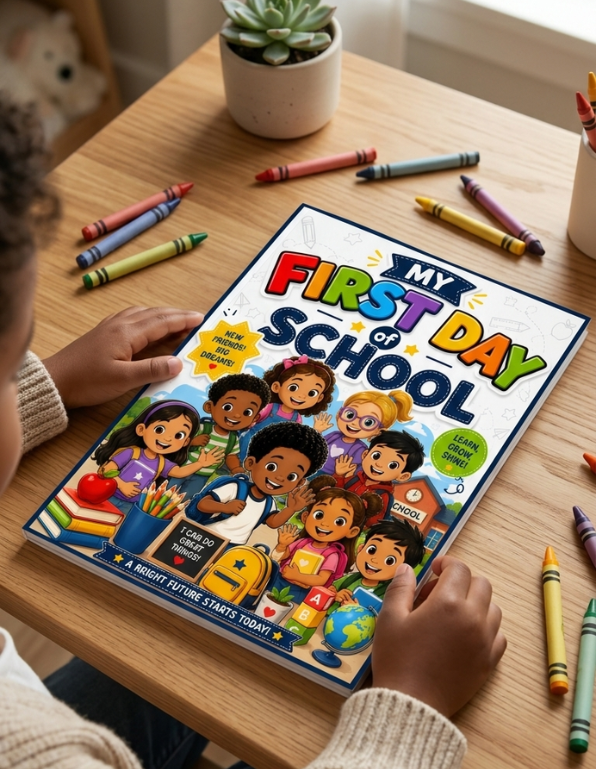
The My First Day of School Coloring Book was created to help children feel excited, encouraged, and emotionally ready for school. With kid-friendly coloring pages, confidence-building prompts, and first-day activities, it gives families a meaningful way to prepare before the big day arrives.
- Supports first day of school confidence
- Helps children talk about feelings in a gentle way
- Great for preschool, kindergarten, and early elementary kids
- Creates a screen-free activity before and after school
- Turns first-day preparation into a meaningful memory
First Day of School FAQs
How do I emotionally prepare my child for the first day of school?
Start early by talking about school, practicing routines, validating their feelings, using positive affirmations, and giving them creative ways to express excitement or nervousness.
What should I do if my child is nervous about school?
Let them know nervousness is normal. Avoid dismissing their feelings. Reassure them with a clear routine, a simple goodbye ritual, and reminders that they are brave and capable.
Can coloring help with first day of school anxiety?
Yes. Coloring can help children calm their bodies, express feelings, and start conversations about school in a low-pressure way.
When should I start preparing my child for the first day?
Start one to two weeks before school begins. This gives your child time to practice routines, ask questions, and become more comfortable with the idea of school.
Emotional Readiness Matters
Your child’s first day of school is more than a schedule change. It is an emotional milestone. With encouragement, practice, creativity, and reassurance, you can help your child walk into school feeling more confident, more prepared, and more deeply supported.
```