
Emotional Healing & Moving Forward
How to Let Go of the Past Without Forgetting Your Story
Letting go does not require you to erase what happened. It means honoring the truth of your story without allowing its most painful chapters to control everything that comes next.
People often tell you to “let go of the past” as though your memories can be placed inside a box, closed, and forgotten. But the past is not only a collection of events. It may contain people you loved, choices you regret, dreams that changed, lessons you earned, and versions of yourself that fought hard to survive.
You may want to move forward without pretending that what happened did not matter. You may want peace without rewriting the truth. You may even fear that releasing the pain means betraying yourself, minimizing the experience, or allowing someone else to escape responsibility.
But letting go and forgetting are not the same thing. You can remember your story without reliving it every day. You can keep the wisdom without continuing to carry all of the emotional weight. You can honor who you were while making room for who you are becoming.
Your story deserves to be remembered—but its most painful chapter does not have to become the ending of your life.
What Does Letting Go of the Past Really Mean?
Letting go does not mean removing every memory, emotion, or reminder. It means gradually changing your relationship with what happened so it no longer directs your self-worth, relationships, decisions, or expectations for the future.
You may still remember the conversation. You may still wish the outcome had been different. You may still feel sadness when certain memories surface. The difference is that the past begins to take its proper place behind you instead of repeatedly becoming your present.
Making peace with your past can involve accepting that some questions may remain unanswered, some apologies may never arrive, and some endings may never feel completely fair. Acceptance does not mean you approve of what happened. It means you stop requiring the past to change before you give yourself permission to live.
 Letting go can begin by giving your memories a safe place to be acknowledged and understood.
Letting Go Is Not the Same as Forgetting
Letting Go Can Mean
Accepting that the experience happened, understanding how it affected you, and choosing not to let it control every future decision.
Letting Go Does Not Mean
Erasing your memories, excusing harmful behavior, denying your feelings, or pretending that the experience was acceptable.
Remembering Can Mean
Keeping the lessons, honoring what you survived, and recognizing how your past shaped your values, boundaries, and strength.
Reliving Can Look Like
Repeatedly replaying what happened, expecting the past to repeat, or allowing an old wound to define your identity and future.
Why Is It So Hard to Let Go of the Past?
Holding onto the past is not always a deliberate choice. Sometimes the mind returns to an experience because it is still searching for an explanation, a different ending, an apology, or a sense of safety.
You may also hold onto pain because it feels connected to your loyalty, identity, or need for justice. Releasing the emotional burden may feel like saying the experience did not matter—even when that is not what letting go means.
The past can also feel familiar. Even painful thought patterns may seem safer than stepping into a future you cannot predict. Moving forward asks you to release not only what hurt you, but also the version of life you expected to have.
Sometimes you are not holding onto the person or experience. You are holding onto the hope that one day the ending will finally feel different.
How to Let Go of the Past Without Erasing Your Story
Letting go is rarely one dramatic decision. It is usually a collection of smaller choices that help you stop carrying the past in the same painful way.
Acknowledge What Actually Happened
Healing becomes difficult when you continuously minimize, rationalize, or rewrite an experience to make it easier for everyone else to accept.
Start by telling yourself the truth. What happened? How did it affect you? What did you lose? What did you need that you did not receive?
Acknowledgment does not require you to remain inside the pain. It simply creates an honest foundation from which you can begin moving forward.
What truth about my past have I been minimizing because it feels difficult to admit?
Allow Yourself to Grieve What You Expected
You may not only be grieving what happened. You may also be grieving the relationship you thought would last, the apology you expected, the opportunity you lost, or the version of yourself you believed you would become.
Grief is not limited to death. It can appear whenever reality separates from something deeply hoped for, loved, or expected.
Giving yourself permission to grieve can help you stop chasing an ending that is no longer available.
What future, relationship, or outcome am I grieving—not only what actually happened?
Separate the Experience From Your Identity
Something painful happened to you, but it is not the complete definition of you. You are more than the relationship that ended, the mistake you made, the opportunity you missed, or the person who failed to value you.
Notice the labels you have attached to yourself. Have you started believing that rejection means you are unlovable? That one poor decision means you cannot trust yourself? That being mistreated means you were not worthy of better?
Letting go includes refusing to build your identity around the most painful interpretation of what occurred.
What have I believed about myself because of this experience, and is that belief completely true?
Stop Waiting for Perfect Closure
Closure is often imagined as a final conversation where every question is answered, every mistake is acknowledged, and the person who hurt you finally understands your pain.
That conversation may never happen. Even when it does, the answer may not create the relief you expected.
Healing without closure means accepting that you may never fully understand another person’s motives. You can still decide that what happened affected you, that your feelings are valid, and that you are ready to stop giving the unanswered questions control over your life.
What answer am I still waiting for, and what would it look like to move forward without receiving it?
Release Responsibility That Was Never Yours
You can take responsibility for your choices without carrying responsibility for another person’s behavior, dishonesty, emotional unavailability, or refusal to communicate.
Self-reflection is valuable, but constant self-blame can become another way of remaining emotionally attached to the past.
Ask yourself what was genuinely within your control and what belonged to someone else. This distinction can make space for accountability without unnecessary shame.
What burden have I been carrying that belongs to another person, an old circumstance, or information I did not have at the time?
Practice Self-Forgiveness
You may wish you had noticed the warning signs sooner, spoken up more clearly, left earlier, made a different choice, or protected yourself better.
But your past self made decisions using the knowledge, confidence, resources, and emotional capacity available at that time. You can learn from the experience without continuing to punish that version of yourself forever.
Self-forgiveness does not mean pretending your choices caused no harm. It means accepting responsibility, making repairs where possible, and allowing growth to become more important than lifelong punishment.
What do I know now that my past self did not know then?
Decide What the Experience Will Teach You
You did not need to experience pain in order to deserve growth. You also do not have to turn every wound into gratitude. But you can decide what wisdom you want to carry forward.
Perhaps you learned to recognize your needs, trust your instincts, communicate more clearly, protect your energy, or stop accepting relationships that require you to disappear.
The lesson does not make the pain acceptable. It helps ensure that the pain does not remain meaningless.
What lesson do I want to keep even after I release the pain?
Create Boundaries That Protect Your Present
Moving forward may require changing your access, communication, routines, or environment. It is difficult to release a wound when it is repeatedly reopened.
A boundary may involve limiting contact, declining conversations that become harmful, removing reminders that keep you emotionally stuck, or saying no without providing a lengthy explanation.
Boundaries are not designed to punish someone else. Their purpose is to protect the life and emotional stability you are rebuilding.
What boundary would make it easier for me to remain present instead of being pulled back into the past?
Reclaim the Parts of Yourself You Left Behind
Pain can cause you to become disconnected from your joy, confidence, creativity, softness, ambition, or ability to trust. You may have changed yourself to survive the relationship or difficult season.
Think about who you were before the experience became the center of your emotional world. What did you enjoy? What made you feel alive? What dreams, relationships, or routines did you neglect?
Moving forward is not only about releasing something. It is also about welcoming yourself back.
What part of myself am I ready to reclaim?
Build a Future That Is Larger Than the Memory
The past often feels most powerful when the present feels empty and the future feels uncertain. Creating new meaning, routines, relationships, and goals gives your attention somewhere healthier to go.
You do not have to create a completely new life overnight. Begin with one experience that reminds you life is still moving: visit a new place, restart an interest, deepen a healthy relationship, or make one choice based on hope rather than fear.
Your story will always include what happened. But as you continue living, that chapter becomes part of a much larger book.
What do I want the next chapter of my life to contain that the previous chapter could not give me?
 Moving forward does not erase the road behind you. It simply allows you to continue your journey.
How to Honor Your Story Without Living Inside It
Your past may contain important parts of your identity, family, relationships, values, and personal growth. The goal is not to disconnect from your history. It is to remember it in a way that supports your present life.
Keep the Lessons
Remember what the experience taught you about your needs, boundaries, values, instincts, and emotional strength.
Release the Labels
You do not have to continue calling yourself foolish, broken, difficult, unlovable, or weak because of one chapter.
Honor Who You Were
Recognize the version of you who survived with the tools and understanding available at the time.
Make Room for Who You Are Becoming
Allow your identity to expand beyond survival, regret, heartbreak, or the need to remain emotionally guarded.
How to Create Your Own Closure
Closure does not always arrive through another person. You can create a personal closing process that helps your mind and emotions recognize that something has ended.
-
1 Write the truth of what happened.
Describe the experience without minimizing your feelings or rewriting it to protect someone else. -
2 Name what you are releasing.
This might be guilt, unanswered questions, an old expectation, resentment, or responsibility that was never yours. -
3 State what you are keeping.
Keep your wisdom, self-respect, memories, lessons, and the strength you discovered. -
4 Choose a symbolic ending.
Store the letter, safely tear it up, close a journal section, or place a meaningful object somewhere that represents moving forward. -
5 Take one future-focused action.
Make a choice that belongs to your next chapter rather than your previous one.
Journal Prompts for Letting Go of the Past
Journaling can help you separate the memory from the meaning you have attached to it. Choose one prompt and write without trying to create a perfect or positive answer.
What part of my past continues to take up the most emotional space in my present?
What am I still waiting to hear, receive, or understand before I allow myself to move forward?
What does holding onto this experience protect me from feeling or facing?
What responsibility have I accepted that does not completely belong to me?
What would I say to the version of myself who lived through this experience?
What belief about myself was created by this experience, and what do I want to believe instead?
What lesson deserves to remain after the emotional pain becomes lighter?
What might become possible if I stopped waiting for the past to change?
What boundary would help prevent this old wound from being repeatedly reopened?
How do I want the next chapter of my story to feel?
A Gentle Letting-Go Journal Ritual
Use this practice when you feel ready to acknowledge an experience and begin changing how you carry it.
-
1 Create a calm environment.
Choose a private space, silence unnecessary notifications, and give yourself enough time to write without rushing. -
2 Begin with the words, “This is what happened.”
Write the experience from your perspective without correcting or questioning your emotional response. -
3 Continue with, “This is what it cost me.”
Name the emotional, relational, practical, or personal impact. -
4 Write, “This is what I am keeping.”
Identify the lessons, strength, wisdom, memories, and values you want to carry forward. -
5 Finish with, “This is what I am releasing.”
Name the guilt, responsibility, expectation, question, or emotional attachment you are ready to loosen. -
6 Close with one act of care.
Drink water, step outside, rest, call someone supportive, or choose a grounding activity before returning to your day.
What to Do When Old Memories Return
Letting go does not guarantee that you will never think about the past again. A song, date, place, conversation, or unexpected reminder may bring old emotions back to the surface.
A difficult memory returning does not mean you have lost all your progress. Healing is not measured by whether you remember. It is often reflected in how you respond when you remember.
Instead of criticizing yourself, pause and identify what was activated. Ask whether the emotion belongs entirely to the present moment or whether part of you is responding to an old experience.
“This memory is part of my past. I am allowed to feel what it brings up, and I am also allowed to return to the life I am living now.”
When memories cause persistent or overwhelming distress, professional support can provide a safer and more individualized place to process them.

A Gentle Place to Release and Rebuild
Your Story Deserves More Than an Empty Page
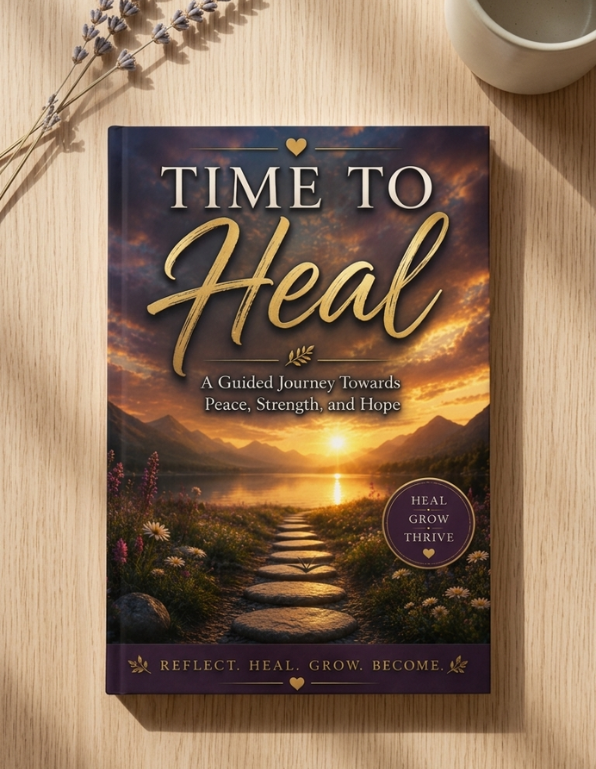
Time To Heal is a guided journal created to help you acknowledge what hurt, release emotional weight, rebuild your relationship with yourself, and move toward your next chapter with greater peace, strength, and hope.
Explore the Time To Heal JournalFrequently Asked Questions About Letting Go of the Past
How do I let go of the past when it still hurts?
Begin by acknowledging the pain instead of forcing yourself to suppress it. Identify what the experience changed, what you are still waiting for, and what support or boundaries you need now. Letting go usually happens gradually rather than through one decision.
Does letting go mean forgetting what happened?
No. Letting go means changing how the experience affects your present life. You can remember what happened, honor its impact, and keep its lessons without allowing the pain to control your identity or future.
Can I heal without receiving closure or an apology?
Yes. Although an honest apology may be meaningful, your healing does not have to remain dependent on another person’s insight or willingness to take responsibility. Personal closure may involve accepting what happened, creating boundaries, and choosing what you will carry forward.
Why do I keep replaying the past in my mind?
You may be searching for an explanation, a safer ending, or a way to prevent the experience from happening again. Journaling, grounding practices, supportive conversations, and professional care may help you understand and interrupt repetitive thought patterns.
How can journaling help me let go?
Journaling can help you organize memories, name emotions, separate responsibility from blame, challenge painful beliefs, and identify what you want to keep or release. Guided prompts can provide structure when a blank page feels overwhelming.
Does moving forward mean forgiving the person who hurt me?
Moving forward does not require reconciliation, restored access, or excusing harmful behavior. Your healing may focus on acceptance, boundaries, self-compassion, safety, and releasing the experience’s control over your present life.
You Can Keep the Story Without Keeping All the Pain
What happened will always be part of your history, but it does not have to remain the center of your identity. Keep the lessons. Honor the person who survived. Remember what mattered. Then give yourself permission to create a life that contains more than what you had to overcome.
This article is intended for general education and self-reflection. It is not medical advice, diagnosis, or a replacement for professional mental health care. Consider contacting a qualified professional when memories or emotional distress feel intense, persistent, or difficult to manage.