
Helping Kids Overcome First Day of School Jitters
A gentle guide for helping children feel calmer, braver, and more emotionally ready for the first day of school through routines, reassurance, creativity, and confidence-building activities.

First day of school jitters are completely normal. Even children who are excited about school can feel nervous about meeting a new teacher, walking into a new classroom, making friends, finding their seat, or being away from home. Those feelings do not mean your child is not ready. They simply mean the first day feels big.
The good news is that parents can help children feel more secure before the school year begins. With gentle conversations, predictable routines, positive affirmations, creative activities, and emotional reassurance, first day nervousness can slowly turn into confidence. This guide shares practical ways to help kids overcome first day of school anxiety and walk into the new year feeling supported.
Signs Your Child May Have First Day Jitters
- Asking repeated questions about school
- Clinging more than usual before drop-off
- Saying their stomach hurts or they feel nervous
- Having trouble falling asleep before school starts
- Becoming quiet, emotional, or easily frustrated
Start by Naming the Feeling
Many children feel nervous before the first day of school but do not always know how to explain it. They may say they do not want to go, ask the same questions repeatedly, become clingy, or act frustrated. Naming the feeling helps make it less scary.
Instead of dismissing the emotion, gently say, “It sounds like you feel nervous because school is new.” When children hear their feelings named calmly, they begin to understand that nervousness is normal and manageable.
Talk About What the First Day Will Look Like
Uncertainty often makes school jitters stronger. Children feel calmer when they know what to expect. Walk your child through the first day in simple steps: waking up, getting dressed, eating breakfast, going to school, saying goodbye, meeting the teacher, playing, learning, eating lunch, and coming home.
You do not need to describe every detail perfectly. The goal is to make the unknown feel more familiar. When children have a mental picture of the day, their confidence often increases.

Practice the Morning Routine Before School Starts
A rushed morning can make nervous feelings bigger. Practicing the morning routine before the first day helps children feel more prepared. Try waking up at the school-year time, choosing clothes, packing the backpack, eating breakfast, brushing teeth, and leaving the house calmly.
Routine creates emotional safety. When children know what comes next, their bodies and minds have less to worry about.
Create a Simple Goodbye Ritual
Goodbyes can be one of the hardest parts of the first day. A short goodbye ritual helps children know what to expect and gives them a loving moment to hold onto.
Keep the ritual warm but brief. A hug, a special phrase, a high five, or a hand squeeze can make drop-off feel predictable. Long, uncertain goodbyes can sometimes make separation anxiety harder.
First Day Calm Checklist
- Talk through the school day
- Practice the morning routine
- Pack the backpack early
- Choose clothes the night before
- Use a positive affirmation
- Create a short goodbye ritual
- Plan a calm after-school activity
Use Positive Affirmations for School Confidence
Positive affirmations can help children build a stronger inner voice before the first day. Short phrases work best because they are easy for kids to remember when they feel nervous.
Try phrases like “I am brave,” “I can try new things,” “I can ask for help,” “I am kind,” and “I am ready to learn.” Repeating these words during quiet moments can help children feel more emotionally prepared.
Give Your Child a Creative Way to Express Worries
Children do not always express anxiety through words. Sometimes they express worries through behavior, repeated questions, or big emotions. Creative activities like coloring, drawing, and simple prompts give kids another way to share what they feel.
A first day coloring activity can make conversations easier because your child does not have to sit face-to-face and explain everything. They can color while talking naturally about what feels exciting or scary.

Visit the School or Drive by Before the First Day
If possible, visit the school before the first day. Show your child the building, entrance, playground, drop-off area, or classroom if available. Familiar places feel less intimidating.
If you cannot visit inside, even driving by the school can help. You can say, “This is where you will go, and this is where I will pick you up.” That simple clarity can bring reassurance.
Practice Asking for Help
Some children feel nervous because they worry they will not know what to do. Practicing how to ask for help can make the first day feel less overwhelming.
Role-play simple phrases like “Can you help me?” “Where do I put my backpack?” “Can I go to the bathroom?” or “I do not understand.” Knowing the words ahead of time gives children more confidence.
Try This the Night Before School
- Pack the backpack together
- Choose the first day outfit
- Read or color quietly before bed
- Say one positive affirmation
- Talk about one thing your child is excited about
- Keep bedtime calm and predictable
Focus on Small Wins, Not a Perfect First Day
Children do not need a perfect first day to have a successful start. They need to know that trying, showing up, being kind, and asking for help are all wins.
When parents focus on effort instead of perfection, children feel less pressure. Remind your child that it is okay if everything feels new. Confidence grows through practice, not perfection.
Plan a Gentle After-School Reset
The first day can be emotionally full. Some children come home excited and talk nonstop. Others come home quiet, tired, or overwhelmed. Both reactions are normal.
Plan a gentle after-school reset like a favorite snack, coloring time, outdoor play, or quiet conversation. Give your child space to decompress before asking too many questions.
Remind Them They Are Not Alone
One of the most comforting messages a child can hear is that they are not the only one feeling nervous. Many children feel first day jitters, even if they do not show it.
Let your child know that new things can feel scary at first, but they become easier with time. Your steady reassurance gives them emotional safety to keep trying.
First day jitters do not mean your child is not ready. They mean your child needs reassurance, rhythm, and a little extra confidence.

A Calm, Creative Way to Ease First Day Jitters
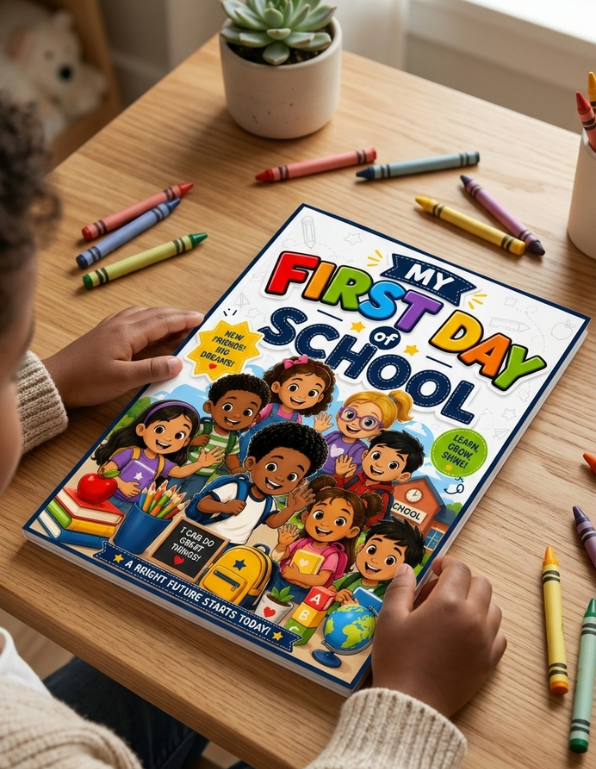
The My First Day of School Coloring Book was created to help children feel encouraged, prepared, and emotionally ready for school. With first day coloring pages, confidence prompts, activity pages, and reflection moments, it gives kids a gentle screen-free way to process excitement and nervousness before the big day.
- Helps children express first day feelings
- Supports confidence, calm, and emotional readiness
- Great for preschool, kindergarten, and early elementary kids
- Perfect for home, homeschool, classroom, and after-school use
- Creates a meaningful first day keepsake for families
First Day of School Jitters FAQs
How do I help my child with first day of school jitters?
Start by validating their feelings, talking through the school day, practicing routines, creating a goodbye ritual, using positive affirmations, and giving them creative ways to express nervousness.
Is it normal for kids to be nervous on the first day of school?
Yes. First day jitters are very common. Children may feel nervous because school is new, unfamiliar, or different from their normal routine.
Can coloring help with first day anxiety?
Yes. Coloring can help children calm down, express feelings, and talk about school worries in a low-pressure way.
What should I say to a child who is scared of school?
Say something reassuring and honest, such as: “It makes sense to feel nervous about something new. I believe in you, and I will come back after school.”
Jitters Can Turn Into Confidence
Helping kids overcome first day of school jitters is not about making every nervous feeling disappear. It is about giving children the reassurance, routine, and encouragement they need to take the next brave step. With calm support at home and meaningful confidence-building activities, your child can begin the school year feeling more prepared, more secure, and more proud of themselves.