
Emotional Healing & Personal Growth
10 Signs You’re Ready to Begin Your Healing Journey
Healing does not begin when every painful feeling disappears. It often begins when you become willing to stop abandoning yourself and start listening to what your heart, mind, and life have been asking you to acknowledge.
You do not need to feel completely strong, confident, or certain before beginning your healing journey. In many cases, readiness appears as a quiet realization that the way you have been carrying the pain is no longer sustainable.
You may be tired of pretending everything is fine. You may notice that old experiences continue influencing your relationships, confidence, decisions, or sense of peace. Or you may simply feel that there must be more to your life than surviving what happened.
Emotional healing is not about erasing your past or returning to the exact person you were before the pain. It is about learning how to understand your emotions, care for your needs, rebuild trust in yourself, and create a future that is not controlled by what wounded you.
Healing begins before you feel completely ready. It begins when a small part of you decides that peace is worth reaching for.
What Does It Mean to Be Ready to Heal?
Being ready to heal does not mean you are no longer angry, sad, confused, or afraid. It does not mean you know exactly what to do next. Readiness is often much quieter than that.
It may look like admitting that something still hurts. It may look like recognizing that a relationship, habit, belief, or coping pattern is keeping you stuck. It may also look like becoming curious about who you could be if you stopped organizing your life around fear, disappointment, guilt, or resentment.
You may recognize yourself in several of the following signs, or only one. A single honest realization can still become the beginning of a meaningful self-healing journey.
 Beginning your healing journey can start with one quiet moment of honesty.
10 Signs You May Be Ready to Begin Healing
You Are Tired of Pretending You Are Fine
You may have become skilled at smiling, staying busy, supporting everyone else, or changing the subject when someone asks how you are doing. From the outside, you appear to be managing. Inside, however, you know you are emotionally exhausted.
Becoming tired of pretending can be an important sign of readiness. It means the distance between how you appear and how you actually feel has become too uncomfortable to maintain.
What feeling have I been hiding because I believed I had to look strong?
You Can Admit That Something Still Hurts
Emotional pain does not disappear simply because time has passed. You may have told yourself that you should be over it by now, only to realize that certain memories, conversations, places, or experiences still affect you deeply.
Admitting that something still hurts is not weakness. It is emotional honesty. You cannot thoughtfully care for a wound you are still forcing yourself to deny.
What experience do I keep minimizing even though it continues to affect me?
You Want Peace More Than You Want to Prove a Point
There may have been a time when being understood, receiving an apology, or proving that you were right felt essential. Those feelings are understandable. But eventually, you may begin to recognize that waiting for someone else to validate your experience keeps your peace dependent on their response.
Wanting peace does not mean excusing harmful behavior. It means deciding that your life deserves to move forward even when someone else never offers the understanding you hoped to receive.
What would choosing peace look like if I stopped waiting for someone else to make everything right?
You Are Beginning to Notice Repeating Patterns
You may notice yourself choosing similar relationships, accepting the same treatment, abandoning your needs, overexplaining your decisions, or reacting to present situations as though an old experience is happening again.
Recognizing an emotional pattern can feel uncomfortable, but it is also empowering. Awareness creates the possibility of responding differently rather than automatically repeating what feels familiar.
What pattern keeps appearing in my life, and what might it be trying to teach me?
You Are Ready to Stop Blaming Yourself for Everything
Self-blame can create the illusion of control. You may believe that if everything was your fault, you can prevent yourself from ever being hurt again by becoming more careful, agreeable, perfect, or emotionally guarded.
Healing often requires separating responsibility from blame. You can learn from your choices without carrying responsibility for another person’s dishonesty, neglect, rejection, manipulation, or inability to meet you with care.
What have I been blaming myself for that was not entirely mine to carry?
You Want to Understand Yourself More Deeply
You may be asking questions you once avoided: Why do I react this way? What am I afraid of? Why is this boundary so difficult for me? What do I actually need? Who am I when I am not trying to please, protect, or prove myself?
Curiosity is a meaningful shift. Instead of judging yourself for your emotions, you are becoming willing to understand where they came from and what they may be trying to communicate.
What part of myself am I finally ready to understand rather than criticize?
You Are Becoming Willing to Set Boundaries
Boundaries may once have felt selfish, harsh, or frightening. Perhaps you worried that saying no would disappoint someone, create conflict, or cause you to be rejected.
As your healing journey begins, you may start recognizing that protecting your emotional well-being is not cruelty. Healthy boundaries help you identify what you can offer, what you can tolerate, and what you are no longer willing to sacrifice to keep others comfortable.
Where do I need a boundary so I can stop feeling emotionally drained or unseen?
You Miss the Person You Used to Be
Pain can make you feel disconnected from your confidence, joy, creativity, softness, ambition, or sense of possibility. You may remember how freely you once laughed, trusted, dreamed, or expressed yourself.
Missing that person can indicate that you are ready to reconnect with the parts of yourself that became hidden beneath survival. Your healing may not return you to exactly who you were, but it can help you reclaim what still belongs to you.
What part of myself do I want to welcome back into my life?
You Are Willing to Ask for Support
Healing does not always happen in isolation. You may be ready to speak honestly with someone you trust, join a supportive community, use a guided journal, or seek help from a qualified professional.
Asking for support does not mean you are incapable of handling your life. It means you recognize that some experiences become more manageable when they are witnessed, understood, and carried with appropriate care.
Who or what could help me feel less alone as I begin healing?
You Can Imagine a Future That Feels Different
You may not know exactly what your future looks like, but you are beginning to believe that it could contain more peace, healthier relationships, stronger boundaries, renewed confidence, or a deeper connection with yourself.
Hope does not have to be loud. Sometimes it is simply the thought, “I do not want to feel this way forever.” That thought can become the first opening through which change enters.
What do I want the next chapter of my life to feel like?
 You do not need to see the entire path before taking your first step.
What Healing Is—and What It Is Not
Healing Is
A gradual process of understanding your emotions, caring for your needs, developing healthier responses, and learning how to move forward without abandoning yourself.
Healing Is Not
Forgetting what happened, excusing harmful behavior, feeling positive every day, never being triggered, or returning to the exact person you were before.
Progress May Look Like
Pausing before reacting, saying no without overexplaining, asking for support, resting without guilt, or recovering more quickly after a difficult moment.
A Difficult Day Does Not Mean
That you have failed, lost all your progress, or returned to the beginning. Emotions can resurface while meaningful growth is still taking place.
How to Begin Your Healing Journey
You do not need to transform your entire life in one week. Begin with a few grounded actions that help you become more honest, supported, and connected to yourself.
-
1 Name what hurts.
Describe the experience or emotion without minimizing it or pressuring yourself to immediately find a positive lesson. -
2 Identify what you need now.
Your need may be rest, reassurance, boundaries, information, distance, connection, professional support, or time. -
3 Choose one manageable action.
Make the first step small enough to complete: write for ten minutes, call someone you trust, take a walk, or say no to one draining request. -
4 Notice how you speak to yourself.
Replace punishment with curiosity. Ask what your reaction is protecting rather than immediately labeling yourself as weak or difficult. -
5 Allow support into the process.
Healing can include trusted relationships, reflective practices, supportive resources, and professional mental health care when needed.
Journal Prompts to Start Your Healing Journey
Guided healing journal prompts can help when you feel ready to reflect but do not know where to begin. Choose one question and allow yourself to answer it honestly.
What have I been carrying emotionally that I am finally ready to acknowledge?
What do I need to forgive myself for not knowing at the time?
What relationship, memory, or belief continues to disturb my peace?
What boundary would help me feel safer and more respected?
What am I afraid might happen if I truly begin moving forward?
What part of myself have I neglected while trying to survive?
What would choosing myself look like in this season of my life?
What do I hope becomes possible as I continue to heal?
What If You Do Not Feel Ready Yet?
You are not required to force yourself into deep reflection before you feel emotionally safe enough to begin. Sometimes preparation is part of the healing process.
You can start by creating stability, identifying supportive people, improving your daily routines, or simply noticing your emotions without trying to change them. Readiness may grow as you experience more safety, clarity, and self-trust.
Complete one sentence: “Today, I feel…” You do not need to explain, analyze, or solve the feeling. Naming it can be enough for today.

A Gentle Place to Begin
Your Healing Journey Does Not Have to Begin With a Blank Page
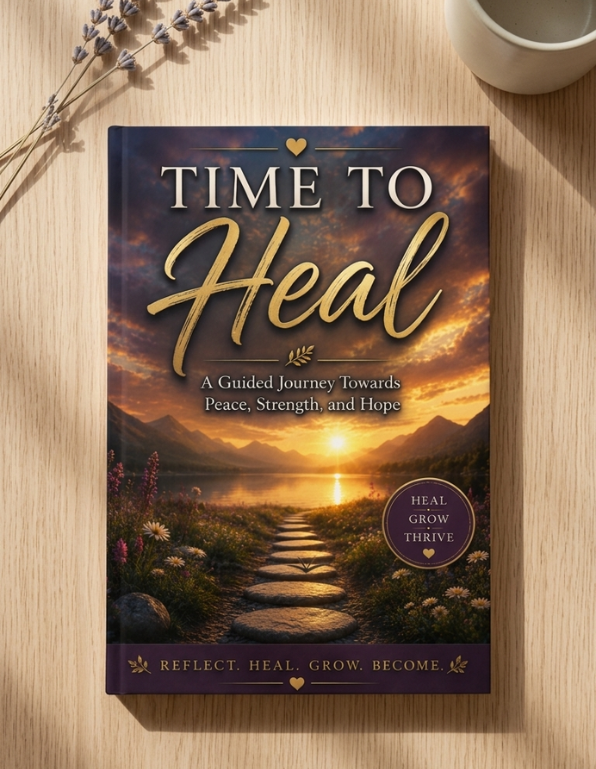
Time To Heal is a guided journal created to help you acknowledge the hurt, release emotional weight, rebuild your relationship with yourself, and move toward your next chapter with greater peace, strength, and hope.
Explore the Time To Heal JournalFrequently Asked Questions About Beginning a Healing Journey
How do I know when I am ready to heal?
You may be ready when you can acknowledge that something still hurts, recognize patterns that are no longer serving you, or feel a desire for greater peace and self-understanding. You do not need to feel completely confident before beginning.
Where should I start my emotional healing journey?
Begin by naming what you are feeling, identifying what you need, and choosing one manageable step. This might include journaling, setting a boundary, speaking with someone you trust, or seeking appropriate professional support.
How long does emotional healing take?
There is no universal timeline. Healing depends on the experience, available support, personal circumstances, and what healing means for you. Progress may occur gradually and may not feel linear.
Does healing mean I have to forgive someone?
Healing does not require you to excuse harmful behavior, reconcile with someone, or make forgiveness happen before you are ready. Your process may focus on boundaries, acceptance, self-compassion, safety, or releasing the experience’s control over your present life.
Can journaling help me begin healing?
Journaling may help you identify emotions, examine patterns, clarify your needs, and track changes over time. A guided journal can be helpful when an empty notebook feels overwhelming.
You Do Not Have to Feel Fearless to Begin
Readiness may not feel like confidence. It may feel like exhaustion, honesty, curiosity, or a quiet desire for something better. That desire matters. Your healing journey can begin with one decision: you will no longer leave yourself alone inside what hurt you.
This article is intended for general educational and self-reflection purposes. It is not medical advice, diagnosis, or a replacement for professional mental health care. Consider contacting a qualified professional when emotional distress feels intense, persistent, or difficult to manage.